Autocad Draw Polyline Vba Emulator
Now I got some of the code I'm constructing to show you. AddLightWeightPolyline(ptx) 'Draw a polyline from the points array. Ultra AutoCAD Tool is a powerful batch utility program for AutoCAD drawing files. Game emulator VisualBoyAdvance. Whats VBA Express? Of 2D polylines or 3D.
Lightweight Polylines 1 Jul, 1999 By: Applications developed before AutoCAD R14 sometimes stumble when they encounter the new objects of Release 14 and later. The most common problem stems from the change in the polyline object inside AutoCAD. AutoCAD R14 introduced a new object named a lightweight polyline that replaces the complex polyline object. When you create a drawing in Release 14 and use commands to create polylines, then you are most likely creating lightweight polylines. From an AutoCAD user's perspective, the lightweight polyline is exactly like the older polyline. But from a programmer's perspective, they are very different. This month, we'll look at these differences from a programmer's point of view-both in AutoLISP and in VBA.
FileFixation.com is a new file sharing web service which gives you access to literally hundreds of thousands of direct downloads including software, games, movies, tv shows, mp3 albums, ebooks and more! To celebrate our launch we are offering unlimited full download access for FREE! This is a limited offer and will soon expire and revert back to the normal member price.  Our downloads database is updated daily to provide the latest download releases on offer.
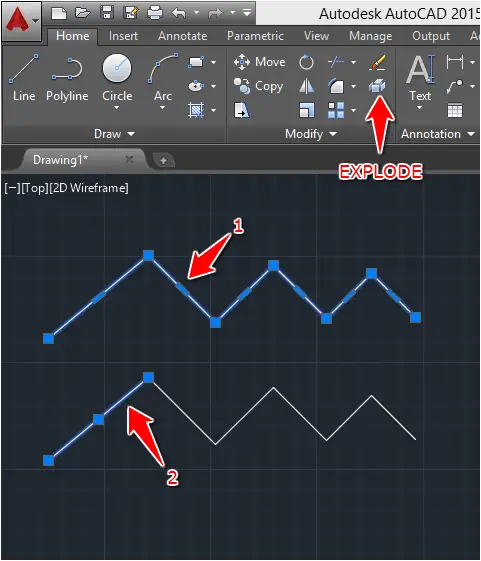
Let's start with an explanation of exactly what a lightweight polyline is versus a traditional polyline. The primary difference is that a lightweight polyline is addressed as a single entity object whereas the traditional polyline is a sequence of entity objects. In a traditional polyline, you find a series of vertex objects that define the attributes of each point. Each vertex has its own entity ID and a full complement of information about that object. In most polylines, the information contained in each vertex is redundant.
For example, the layer and linetype assignments rarely vary (and shouldn't!) between vertices. In fact, about the only information each vertex contains that is unique is the x, y and z points and bulge factor.
In some cases, the width will vary between vertices as well. Thus, a traditional polyline object takes up a lot more space than it might need in the majority of instances where polylines are used in AutoCAD drawings. That is where a lightweight polyline comes into play. A lightweight polyline contains only the point, bulge and width information for each vertex.
And, it is all contained in a single entity. A lightweight polyline has a repeating set of group codes for these values at each vertex point.
This is best seen in the example that follows. First, draw a simple rectangle. Command: RECTANG Specify first corner point or [Chamfer/Elevation/Fillet/ Thickness/Width]: 0,0 Specify other corner point: 1,1 Next, type in the expression (entget (entlast)) at the command prompt to reveal the contents of the lightweight polyline. Entity List Resulting From (ENTGET (ENTLAST)) After Drawing a Rectangle From 0,0 to 1,1 ( (-1. 'LWPOLYLINE') (330.